Wont vs. Want: Grammar Rules, Usage, and Real Examples
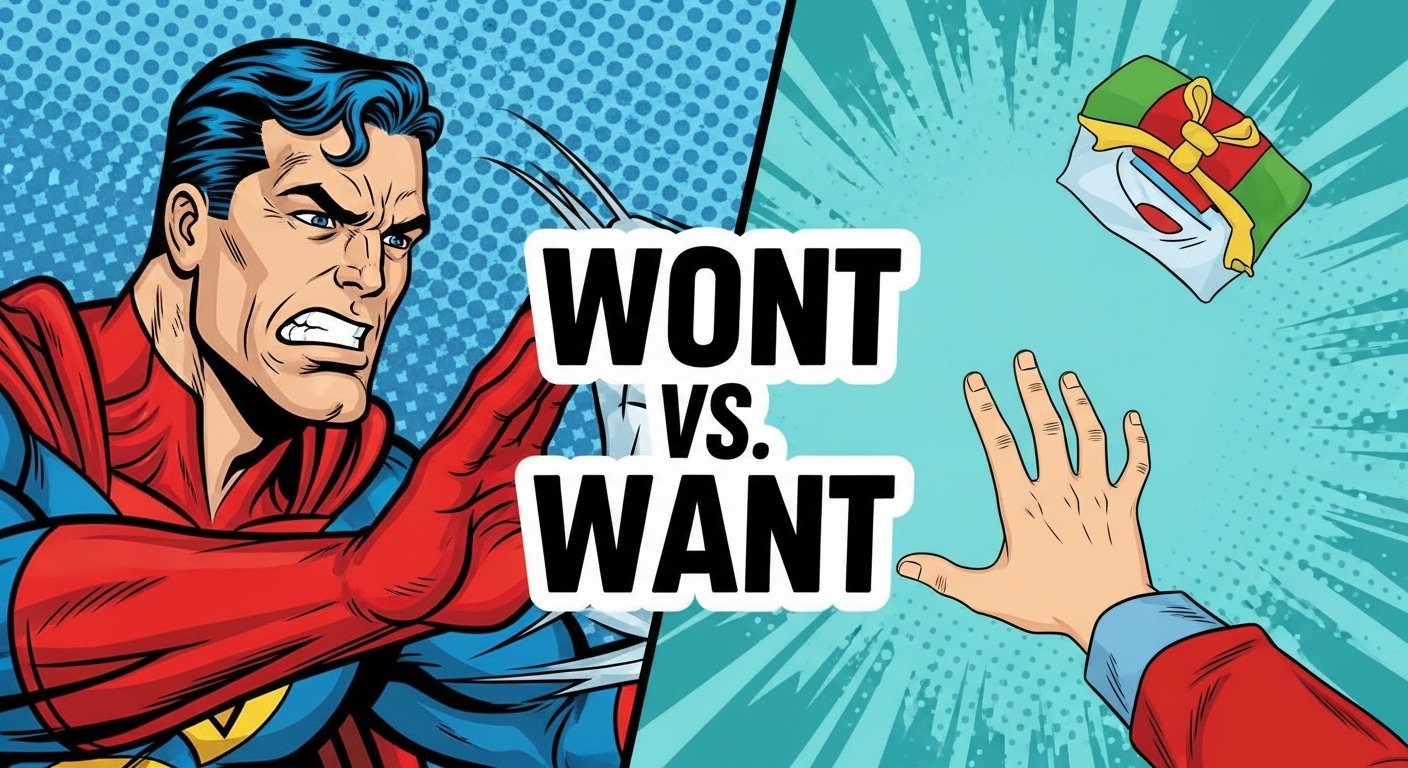
The words wont and want are often confused in writing, but they have distinct meanings and uses.
- Want expresses desire or need.
- Wont describes a habitual behavior or customary action.
Example:
- I want to learn French.
- She is wont to take an afternoon walk every day.
Understanding the difference will help you avoid common grammar mistakes.
The Origin of Wont and Want
Origin of the Word “Want”
The word want comes from Old English wanian, meaning “to lack” or “to be deficient.” Over time, it shifted to mean “to desire” or “wish for something.”
Origin of the Word “Wont”
Wont originates from Old English gewunian, meaning “to be accustomed to” or “habitual.” Historically, it was used to describe routine behaviors or customs.
Why Spelling Differences Exist
While want and wont sound similar, their spellings reflect their unique origins and functions. Confusing them can change the meaning of a sentence entirely.
British English vs American English Usage
British English Usage
Both want and wont are used in British English, with wont being slightly more formal or literary.
American English Usage
In American English, want is widely used in everyday language, while wont appears more in formal or historical texts.
Comparison Table
| Word | Meaning | Usage Example | Region |
|---|---|---|---|
| Want | Desire or need | I want to eat ice cream. | US & UK |
| Wont | Habitual behavior | He is wont to rise early. | US & UK (formal) |
Which Word Should You Use?
For Everyday Writing
Use want to describe desires, needs, or wishes.
For Formal or Literary Writing
Use wont when describing habitual actions or customs.
For Academic Writing
Stick to want for clarity unless discussing historical or literary habits, where wont may appear.
Common Mistakes with Wont and Want
Mistake 1: Thinking Wont Needs an Apostrophe
Many assume wont is a contraction like won’t, but it’s a standalone word with a different meaning.
Mistake 2: Confusing Want and Wont
Mixing these words can distort your sentence:
- Incorrect: I am wont this chocolate.
- Correct: I want this chocolate.
Mistake 3: Using “Wonting” Incorrectly
The continuous form wonting exists but is rare. Use it carefully or avoid it.
Mistake 4: Overcorrecting with Won’t
Remember, won’t is the contraction of will not, not a replacement for wont.
Wont and Want in Everyday Examples
In Emails
- Want: I want to schedule a meeting next week.
- Wont: He is wont to reply quickly to urgent emails.
In News Writing
- Want: The city wants more green spaces.
- Wont: The mayor is wont to visit local communities regularly.
On Social Media
- Want: Do you want to join our live session?
- Wont: Rarely used; mostly seen in literary posts.
In Formal Writing
- Wont can give a formal or historical tone: The king was wont to consult his advisors.
In Education or Psychology
- Want: Refers to desires or needs.
- Wont: Describes habits or learned behaviors.
Google Trends & Usage Data
Search Popularity
Want dominates online searches due to its common usage. Wont appears mostly in literature or formal content.
Country-Based Usage
- US: Want > Wont
- UK: Similar pattern, but wont appears more in literary contexts.
Context-Based Usage
- Social media & marketing: Want
- Historical texts & literary analysis: Wont
Comparison Table: Wont vs Want
| Feature | Want | Wont |
|---|---|---|
| Part of Speech | Verb | Adjective |
| Meaning | Desire, need | Habitual, accustomed |
| Example | I want pie. | My dog is wont to beg for treats. |
| Frequency | Very common | Less common, formal/literary |
| Continuous Form | Wanting | Wonting (rare) |
| Confusion With | Won’t | Want |
Frequently Asked Questions
Is wont a real word?
Yes, wont is a real word meaning “accustomed” or “habitual.”
Is want a real word?
Yes, want is a verb expressing desire or need.
Do they mean different things?
Absolutely. Want = desire; wont = habit or customary behavior.
Which spelling is more common?
Want is far more common in everyday English.
Can I use both in one article?
Yes, if contextually appropriate, but keep meanings clear.
Which spelling should students use?
Students should use want unless writing literature or historical analysis.
Which is better for content writing?
Want is better for modern content writing due to clarity.
Conclusion
Understanding the difference between wont and want is essential for clear writing. Want expresses desire, while wont refers to habits or customary behavior. By remembering this distinction, you can write with confidence and avoid common mistakes.