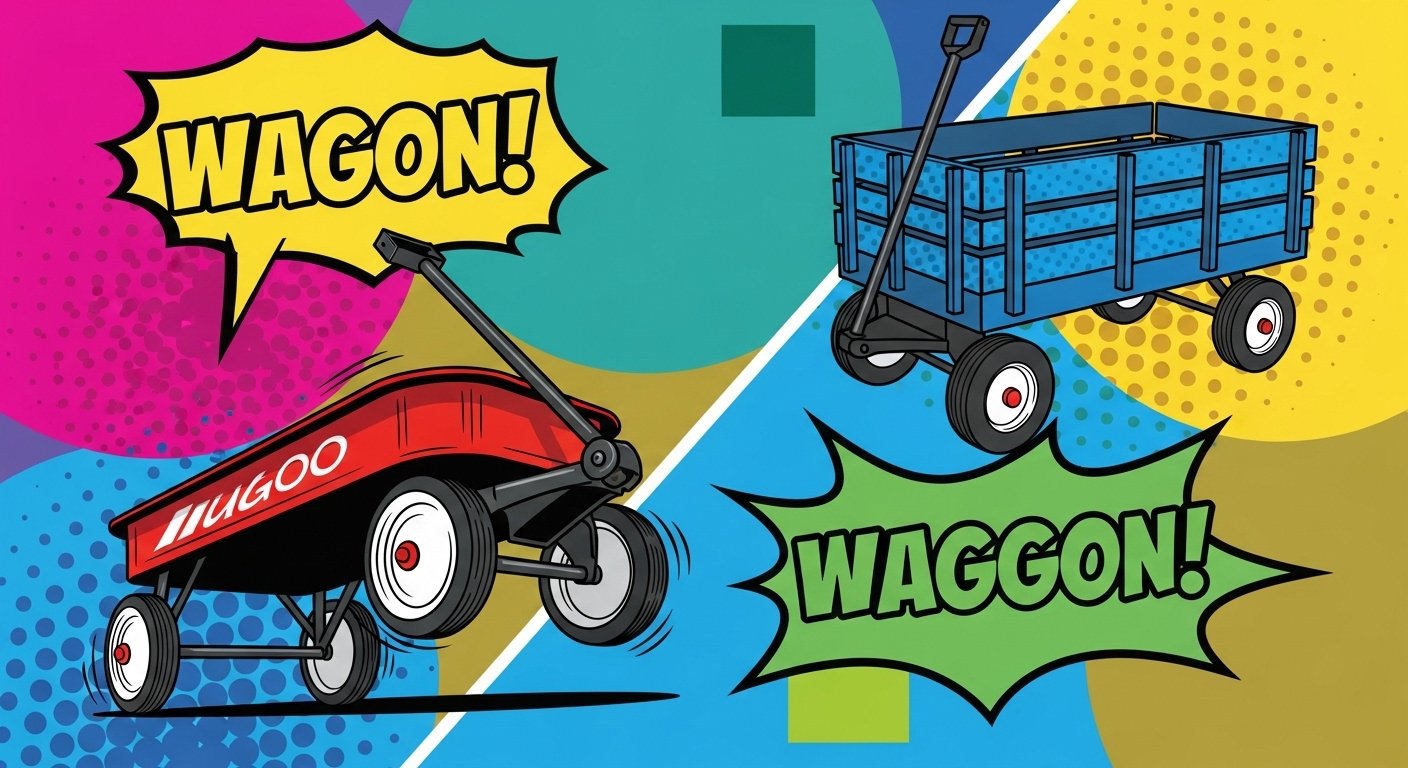
Wagon vs Waggon: Spelling Differences and Usage Guide
Wagon and waggon are simply two spellings of the same word, referring to a sturdy four-wheeled vehicle used for transporting goods or people. Today, wagon is the standard spelling across all main varieties of English, while waggon is largely archaic, appearing occasionally in older British texts.
The History of Wagon and Waggon
The Origin of the Word
The term “wagon” originates from the Middle Dutch word wagen, which itself stems from the Proto-Germanic wagenaz. Both “wagon” and “waggon” have retained the same meaning over centuries, primarily denoting a vehicle pulled by horses or oxen for transport purposes.
Early British English Usage
Historically, waggon was the preferred spelling in British English, particularly before the 20th century. This spelling was consistent in literature, newspapers, and formal writing.
Shift to Wagon
In the 20th century, the shorter spelling wagon gained dominance. Today, it is overwhelmingly preferred in both British and American English, with waggon considered archaic but occasionally seen in historical or literary contexts.
British vs American English Spelling
British English Usage
Modern British English now largely favors wagon over waggon. Even major newspapers like The Guardian, Telegraph, and Financial Times use wagon in their reporting:
- “The sooner you fall off whichever wagon you tipsily clambered aboard at the strike of midnight…” [Guardian]
- “You guess almost from the outset that the recovering addicts are going to fall off the wagon.” [Telegraph]
American English Usage
In American English, wagon has always been the standard spelling:
- “Paddle shifters in a station wagon would seem at first glance about as necessary as a roof rack on a convertible.” [Charleston Post Courier]
- “Becoming frightened while on Meyer Street, a horse attached to a milk wagon ran away while the driver was delivering milk.” [Arizona Daily Star]
Usage Comparison Table
| Region | Preferred Spelling | Notes |
|---|---|---|
| United States | Wagon | Standard and universal |
| United Kingdom | Wagon | Modern standard; waggon now rare |
| Historical British English | Waggon | Seen in texts before 1900s |
When to Use Wagon or Waggon
For Modern Writing
Use wagon in all contemporary writing—news articles, blogs, academic papers, or general content. Waggon is best reserved for historical references or when quoting older texts.
For British Audiences
Even in the UK, wagon is far more common today. Using waggon may seem outdated unless the context is deliberately historical or stylistic.
For American Audiences
Always use wagon.
For Historical or Literary Contexts
If quoting texts from the 19th century or earlier, waggon may appear. It is a legitimate variant but mostly obsolete.
Common Mistakes with Wagon and Waggon
Mistake 1: Using Waggon in Modern Texts
Many writers assume waggon is a British spelling and use it in contemporary writing. This can appear outdated.
Mistake 2: Mixing Spellings in One Document
Switching between wagon and waggon in the same text can confuse readers and reduce credibility.
Mistake 3: Confusing Meaning
Both spellings have the same meaning, so there’s no need to change based on context alone.
Mistake 4: Overcorrecting Historical References
When quoting older literature, it’s acceptable to retain waggon, but don’t alter modern usage unnecessarily.
Wagon and Waggon in Everyday Writing
In News Articles
Modern British newspapers now use wagon consistently:
- “Toyota hopes to capitalise on the recent uptick with the unveiling of a wagon-type version of its popular Prius hybrid hatchback at the Detroit car show.” [Financial Times]
In Literature
Older British novels or historical writing may feature waggon, reflecting past spelling norms.
On Social Media
Contemporary writers almost always use wagon, as waggon looks outdated or stylistically odd.
In Formal Writing
Academic and professional documents should always use wagon to align with current spelling standards.
Usage Trends Over Time
Data from Google Ngram Viewer shows a clear shift:
- Waggon steadily declined in British English after 1900.
- Wagon became increasingly dominant and is now the universal standard across all English varieties.
Frequently Asked Questions
Is waggon a real word?
Yes, but it is mostly archaic today and was common in British English before the 20th century.
Is wagon a real word?
Yes, wagon is the standard spelling in both British and American English.
Do they mean different things?
No, both refer to a four-wheeled vehicle for transport.
Which spelling is more common?
Wagon is far more common in contemporary usage worldwide.
Can I use both in one article?
It is best to stick to wagon in modern writing; using both can confuse readers.
Which spelling should students use?
Students should use wagon in assignments, exams, and academic writing.
Which spelling is better for content writing?
Wagon is preferred for SEO, readability, and contemporary relevance.
Conclusion
While waggon has historical significance, wagon is the standard spelling today across all English-speaking regions. For clarity, consistency, and modern usage, always opt for wagon unless referencing historical texts.