Loafs or Loaves: Meaning, Usage, and Grammar Guide
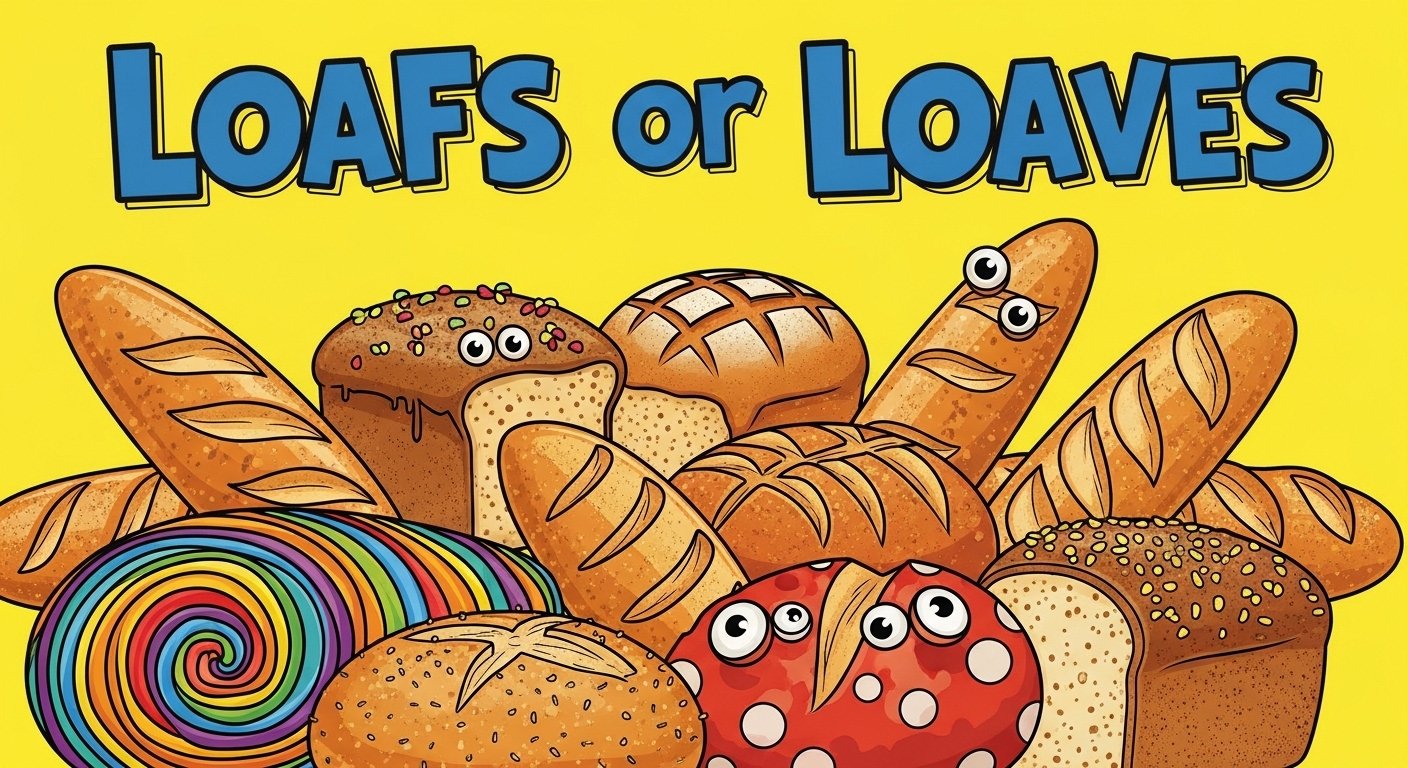
The words loafs and loaves are often confused because they are similar in spelling and pronunciation. The key difference is their function in English:
- Loafs is the third-person present form of the verb loaf, meaning to be lazy or idle.
- Loaves is the plural form of loaf, meaning a unit of bread.
Understanding which to use depends entirely on whether you are describing inaction or bread.
The Origins of Loafs and Loaves
The Verb “Loaf” and Its Forms
The verb loaf emerged in the 1830s and is derived from the noun loafer, which referred to a lazy or idle person. Loafer itself comes from the German word Landlaufer, meaning a wanderer or vagabond.
The verb forms include:
- loafs (third-person present)
- loafed (past tense)
- loafing (present participle)
Example:
This retired luchador may not look like much initially – he limps, he loafs, he grumbles – but he’s an important character from the source material. (Baltimore Sun)
The Noun “Loaf” and Plural “Loaves”
The noun loaf refers to a unit of bread, either whole or sliced. To form the plural, the “f” changes to a “v” followed by “-es,” resulting in loaves. This spelling pattern originates from Old English, where an “f” between vowels was pronounced like a “v.”
Example:
You could say that I’m even a little bit addicted to them – I even bake on weeks when my family doesn’t need seven loaves of challa. (Jerusalem Post)
British vs American Usage of Loafs and Loaves
Verb Usage in British English
In both British and American English, loafs as a verb is uncommon but grammatically correct.
Noun Usage in British English
British English uses loaves exclusively for the plural of bread.
American English Usage
Similarly, American English uses loaves for bread, while loafs appears rarely in informal writing or literature to indicate idleness.
Comparison Table
| Word | Function | Example Usage |
|---|---|---|
| loafs | Verb (idle) | He loafs around the park every morning. |
| loaves | Noun (bread) | She bought three loaves of sourdough bread. |
When to Use Loafs vs Loaves
For Verbs and Actions
Use loafs when describing a person being idle or lazy.
Example:
The heart of the film is taken up with the two brothers getting to know their father as he loafs around drinking and smoking with friends. (Hollywood Reporter)
For Bread
Use loaves when referring to bread.
Example:
But if you’re several loaves in and have decided baking might be more than just a passing COVID-era distraction, it might be time to level-up your bread-making tools. (Bon Appetit Magazine)
For Writing and Academic Use
- Loafs is rarely used in formal academic writing unless discussing literature or idioms.
- Loaves is standard when discussing bread or culinary contexts.
Common Mistakes with Loafs and Loaves
Mistake 1: Using Loafs for Bread
Incorrect: I bought three loafs of bread.
Correct: I bought three loaves of bread.
Mistake 2: Confusing the Verb with the Noun
Incorrect: He made two loafs of bread while loafing on the couch.
Correct: He made two loaves of bread while loafing on the couch.
Mistake 3: Mixing Meanings in One Sentence
Avoid combining the two forms unless context is clear.
Examples in Everyday English
In Literature
The novel’s character loafs through the city, avoiding responsibility.
In Culinary Context
Freshly baked loaves filled the kitchen with an inviting aroma.
In Media
Journalists often write about loaves when describing food, but loafs may appear in storytelling or reviews.
Loafs vs Loaves: Summary Table
| Word | Type | Meaning | Example |
|---|---|---|---|
| loafs | Verb | Be lazy or idle | He loafs on the couch all afternoon. |
| loaves | Noun | Plural of bread | She sliced the loaves for breakfast. |
Frequently Asked Questions
Is loafs a real word?
Yes, loafs is the third-person present tense of the verb loaf, meaning to be idle.
Is loaves a real word?
Yes, loaves is the plural of the noun loaf, referring to bread.
Do they mean different things?
Absolutely. Loafs = lazy actions, loaves = bread.
Which is more common?
Loaves is far more common in everyday English due to its culinary usage.
Can both be used in one article?
Yes, but ensure the context clearly distinguishes the verb and the noun.
Which should students use?
Use loaves for writing about bread; loafs is appropriate for literary or figurative contexts.
Conclusion
Although loafs and loaves look and sound similar, their meanings are distinct. Remember: loafs for laziness and loaves for bread. Proper usage ensures clarity in writing, whether for literature, journalism, or daily communication.