Burn the Candle at Both Ends: Meaning, Origin, and Modern Usage
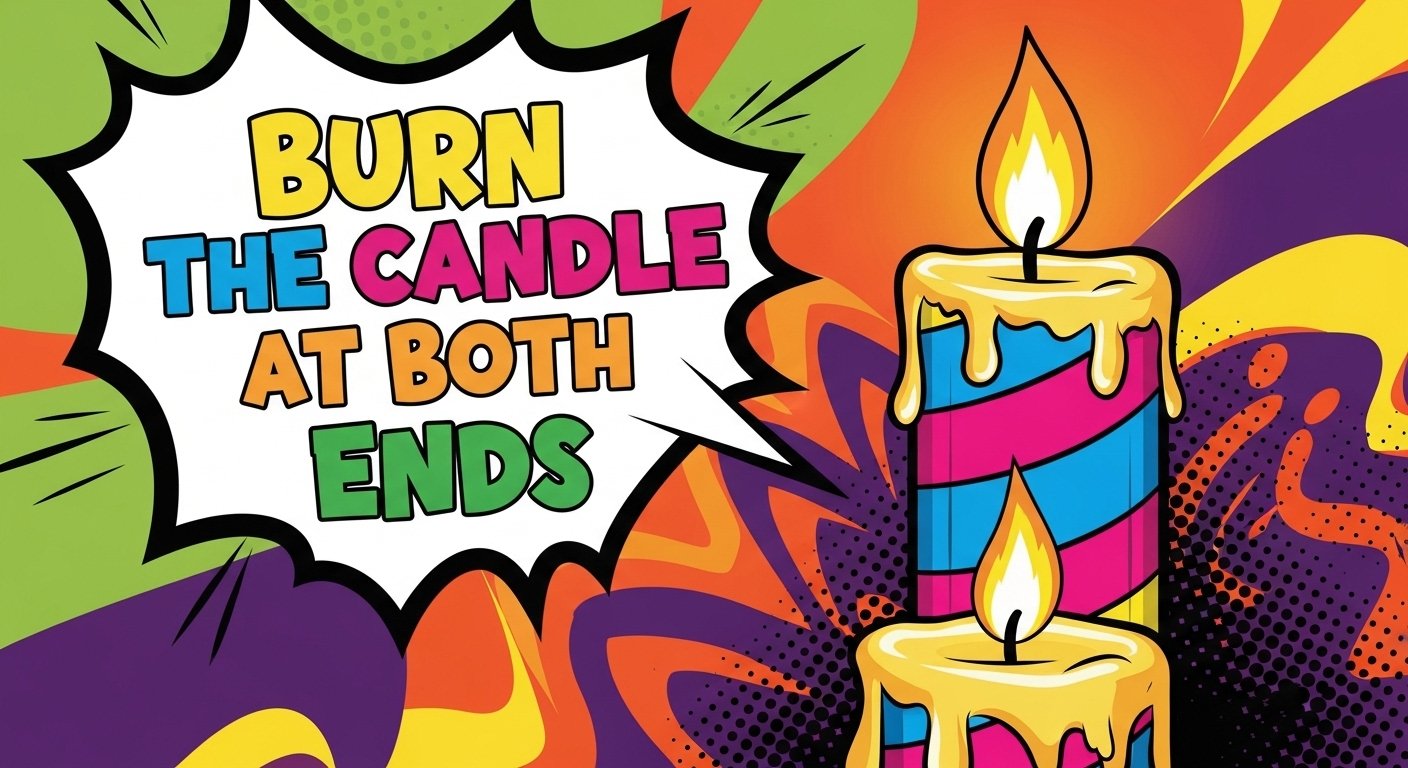
Burn the candle at both ends means to exhaust yourself by working too much or staying active late at night and waking up early. It describes a lifestyle that is intense, fast-paced, and unsustainable over time.
If someone is burning the candle at both ends, they are pushing their energy beyond healthy limits, often sacrificing rest, balance, and long-term well-being.
The Origin of Burn the Candle at Both Ends
Origin of the Phrase “Burn the Candle at Both Ends”
The idiom traces back to 17th-century France. It appeared in the French phrase “Brusler la chandelle par les deux bouts,” which was documented in 1611 in A Dictionarie of the French and English Tongues by Randle Cotgrave.
At that time, candles were expensive household items. Burning a candle from both ends caused it to melt twice as fast, making it a symbol of waste and extravagance.
Early Meaning: Wastefulness
Initially, the phrase did not refer to exhaustion. Instead, it described financial irresponsibility or reckless spending.
In 1730, Nathan Bailey included the phrase in his book Dictionarium Britannicum, defining it as:
“The Candle burns at both Ends. Said when Husband and Wife are both Spendthrifts.”
Here, the idiom referred to wasteful behavior within a household, not overwork.
How the Meaning Evolved
Over time, the idiom shifted from financial waste to personal energy depletion. The metaphor expanded: instead of money being wasted, it was time, energy, and vitality that were consumed too quickly.
This modern interpretation gained popularity in 1920 when poet Edna St. Vincent Millay wrote in her poem First Fig:
“My candle burns at both ends;
It will not last the night;
But ah, my foes, and oh, my friends—
It gives a lovely light!”
Her poetic use helped solidify the modern meaning of passionate but exhausting living.
Literal Meaning vs Figurative Meaning
Literal Meaning
Literally, burning a candle at both ends would cause it to burn twice as quickly. Since candles provide light through slow, steady burning, lighting both ends would rapidly consume the wax.
This literal waste forms the foundation of the idiom.
Figurative Meaning
Figuratively, the phrase now means:
- Working long hours
- Sleeping very little
- Living at an unsustainable pace
- Overcommitting yourself
It implies intensity but also warns of burnout.
Historical Meaning vs Modern Meaning
Historical Usage
In the 17th and 18th centuries, the idiom symbolized:
- Financial recklessness
- Excessive spending
- Household waste
It was more about material resources than physical energy.
Modern Usage
Today, “burn the candle at both ends” refers to:
- Overworking
- Academic pressure
- Parenting exhaustion
- Balancing multiple jobs
- Pursuing ambitions without rest
The focus has shifted from financial waste to personal burnout.
When Should You Use This Idiom?
In Everyday Conversation
You can use it casually when describing a busy or exhausting schedule.
Example:
- “Ever since I started my new job and night classes, I’ve been burning the candle at both ends.”
In Professional Writing
It can describe corporate burnout or work-life imbalance.
Example:
- “Many startup founders burn the candle at both ends during early growth stages.”
In Academic Writing
The phrase can be used metaphorically in essays discussing productivity, health, or social pressures. However, it should be used carefully in formal academic contexts, depending on tone.
In Creative Writing
Writers often use the idiom to symbolize ambition, passion, or self-destruction.
Common Mistakes with Burn the Candle at Both Ends
Mistake 1: Using It Literally
The phrase is almost always figurative. Writing about an actual candle being burned from both ends rarely applies unless discussing the idiom itself.
Mistake 2: Confusing It with “Burning Out”
While related, “burning out” refers to complete exhaustion. “Burning the candle at both ends” describes the behavior that leads to burnout.
Mistake 3: Using It for Short-Term Effort
Pulling one all-nighter does not necessarily mean you are burning the candle at both ends. The idiom implies ongoing exhaustion.
Mistake 4: Ignoring the Warning Tone
The phrase often carries a cautionary meaning. It suggests that the pace cannot continue forever.
Burn the Candle at Both Ends in Everyday Examples
In Emails
- “I’ve been burning the candle at both ends this week, so I may need extra time to finish the report.”
In News Writing
- “Healthcare workers have been burning the candle at both ends during the crisis.”
On Social Media
- “Working two jobs and studying full-time. Definitely burning the candle at both ends.”
In Formal Writing
- “Modern work culture encourages individuals to burn the candle at both ends, often at the cost of mental health.”
In Health and Psychology Discussions
Psychologists often describe this pattern as chronic overextension. Long-term sleep deprivation and stress can result from continuously burning the candle at both ends.
Why the Idiom Still Matters Today
The phrase remains relevant because modern culture often glorifies overwork. Hustle culture, academic competition, and economic pressures make many people live in a constant state of exhaustion.
Yet the idiom carries wisdom. Just as a candle cannot last the night if lit from both ends, human energy is limited. Without rest, performance declines.
The metaphor is powerful because it combines beauty and warning. As Millay wrote, it “gives a lovely light,” but it will not last.
Comparison Table: Historical vs Modern Meaning
| Aspect | Historical Meaning | Modern Meaning |
|---|---|---|
| Time Period | 17th–18th Century | 20th Century–Present |
| Main Focus | Financial waste | Personal exhaustion |
| Resource Being Wasted | Money and household goods | Time and energy |
| Tone | Criticism of spendthrifts | Warning against burnout |
Frequently Asked Questions
Is “burn the candle at both ends” a real idiom?
Yes. It has been documented since 1611 and is widely recognized in English-speaking countries.
Does it always mean exhaustion?
In modern English, yes. Historically, it referred to financial waste.
Is the phrase negative?
Generally, yes. It implies unsustainable effort, although sometimes it can suggest passion or ambition.
Can it be used in formal writing?
Yes, but it depends on tone. It works well in essays, journalism, and reflective writing.
Where did the modern meaning come from?
The modern association with overwork became popular after Edna St. Vincent Millay used the phrase in her 1920 poem First Fig.
Is the idiom still commonly used?
Yes. It appears frequently in discussions about work-life balance, student stress, and entrepreneurship.
Conclusion
“Burn the candle at both ends” is a powerful idiom that has evolved over four centuries. Originally symbolizing financial waste in 17th-century France, it gradually transformed into a metaphor for personal exhaustion and overwork.
From its early appearance in lexicons by Randle Cotgrave and Nathan Bailey to its poetic revival by Edna St. Vincent Millay, the phrase has maintained its core idea: consuming something too quickly leads to loss.
Today, the idiom serves as both description and warning. It reminds us that while intense effort may produce brilliant results, it cannot be sustained forever. Like a candle burning at both ends, the light may shine brightly, but it will not last the night.