Bingeing vs Binging: Complete Guide, Usage, and Examples
A binge refers to a period in which someone indulges in an activity without limits. Traditionally, it has been associated with eating or drinking alcohol, but in recent years, its meaning has expanded to include watching television, streaming videos, or other forms of entertainment. The key idea is excess over a defined period.
The verb form, to binge, indicates engaging excessively in an activity. Modern usage frequently involves watching shows or entire seasons online, commonly called binge-watching. Today, the term is often used without “watch,” as it is widely understood.
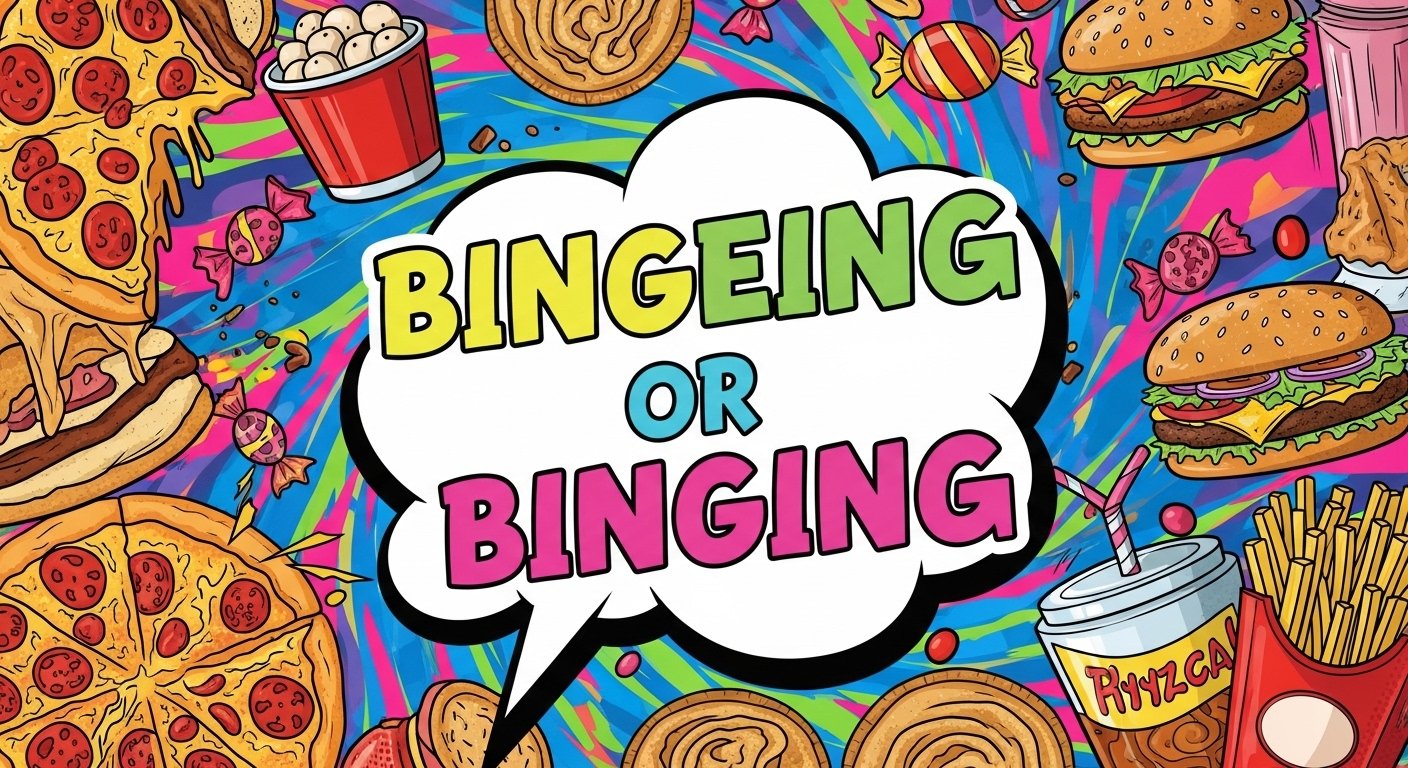
The progressive tense of the verb can be spelled in two ways: bingeing or binging.
Quick Answer: Bingeing or Binging?
Both spellings are correct, but usage depends on preference, context, and style guides. In general:
- Bingeing – More traditional spelling, especially in British English.
- Binging – More popular in recent years, especially in American English.
The Origin of Bingeing and Binging
The Word “Binge”
The term “binge” originated as slang in the 19th century, initially meaning a period of heavy drinking. Over time, it broadened to other forms of excessive behavior, including overeating and excessive media consumption.
Adding “-ing” to Binge
When forming the progressive tense, both bingeing and binging are correct. Some style guides recommend dropping the ‘e’ before adding -ing (thus “binging”), while others retain it (“bingeing”) for clarity.
Why Different Spellings Exist
The variation comes from regional preferences and historical changes in English spelling. Both forms convey the same meaning, so the choice is often stylistic.
British English vs American English
British English Usage
British English often prefers bingeing, maintaining the traditional spelling with the “e.” It appears more frequently in newspapers and formal publications.
American English Usage
American English has increasingly favored binging, especially in modern contexts like streaming shows or digital media. Google Ngram data indicates binging is used almost three times more often than bingeing in books.
Comparison Table
| Feature | Bingeing | Binging |
|---|---|---|
| Region | British English | American English |
| Usage | Traditional | Modern/popular |
| Style | Retains ‘e’ | Drops ‘e’ for simplicity |
| Context | Eating, drinking, formal | Entertainment, media, informal |
Choosing the Right Spelling
For US Audiences
Use binging, as it is the most common and widely recognized in contemporary American English.
For UK and Commonwealth Audiences
Use bingeing, particularly in formal writing or journalism.
For Global Contexts
Either form is acceptable, but consistency is key. Pick one spelling and stick with it throughout your text.
For Academic Writing
Follow the style guide recommended by your institution. APA, MLA, and Chicago styles accept both, but check for regional preferences.
Common Mistakes to Avoid
Mistake 1: Thinking One Form Is Incorrect
Both spellings are valid; avoid assuming one is a mistake.
Mistake 2: Mixing Spellings
Do not alternate between bingeing and binging in the same document.
Mistake 3: Confusing Meaning
Remember, both forms refer to excessive activity, not a specific type.
Mistake 4: Overcorrecting
Don’t change the spelling unnecessarily if it aligns with your target audience.
Examples in Everyday Use
In Emails
- “I spent the weekend binging on the latest season of Stranger Things.”
In News Writing
- “Fox reports that viewers continue bingeing on popular shows after release.”
On Social Media
- “Who else is guilty of bingeing every new episode as soon as it drops?”
In Formal Writing
- “His prolonged bingeing of alcohol raised concerns among his doctors.”
In Health and Psychology
- “She and her therapist discussed the effects of binging and purging in eating disorders.”
Google Trends and Usage Data
Search Popularity
Data shows ‘binging’ is searched more frequently than ‘bingeing’, particularly in relation to TV shows and media streaming.
Country-Based Usage
- US: Binging dominant
- UK: Bingeing more common
- Australia/Canada: Both forms used, with preference depending on the context
Context-Based Usage
- Media/entertainment → binging
- Formal/medical contexts → bingeing
Real-Life Example Sentences
- “He and Kim lived a two-year nightmare watching Brandon’s binging and purging from an eating disorder.” – The Sun Herald
- “Fox hopes the ratings momentum will continue as viewers engage in all-out bingeing of popular shows.” – Los Angeles Times
Conclusion
Both bingeing and binging are correct spellings of the progressive tense of to binge. Usage depends on audience, regional preferences, and context. The most important guideline is consistency. Choose the spelling that fits your audience and style guide, and maintain it throughout your content.