The Worm Has Turned: Meaning, Origin, and Usage Explained
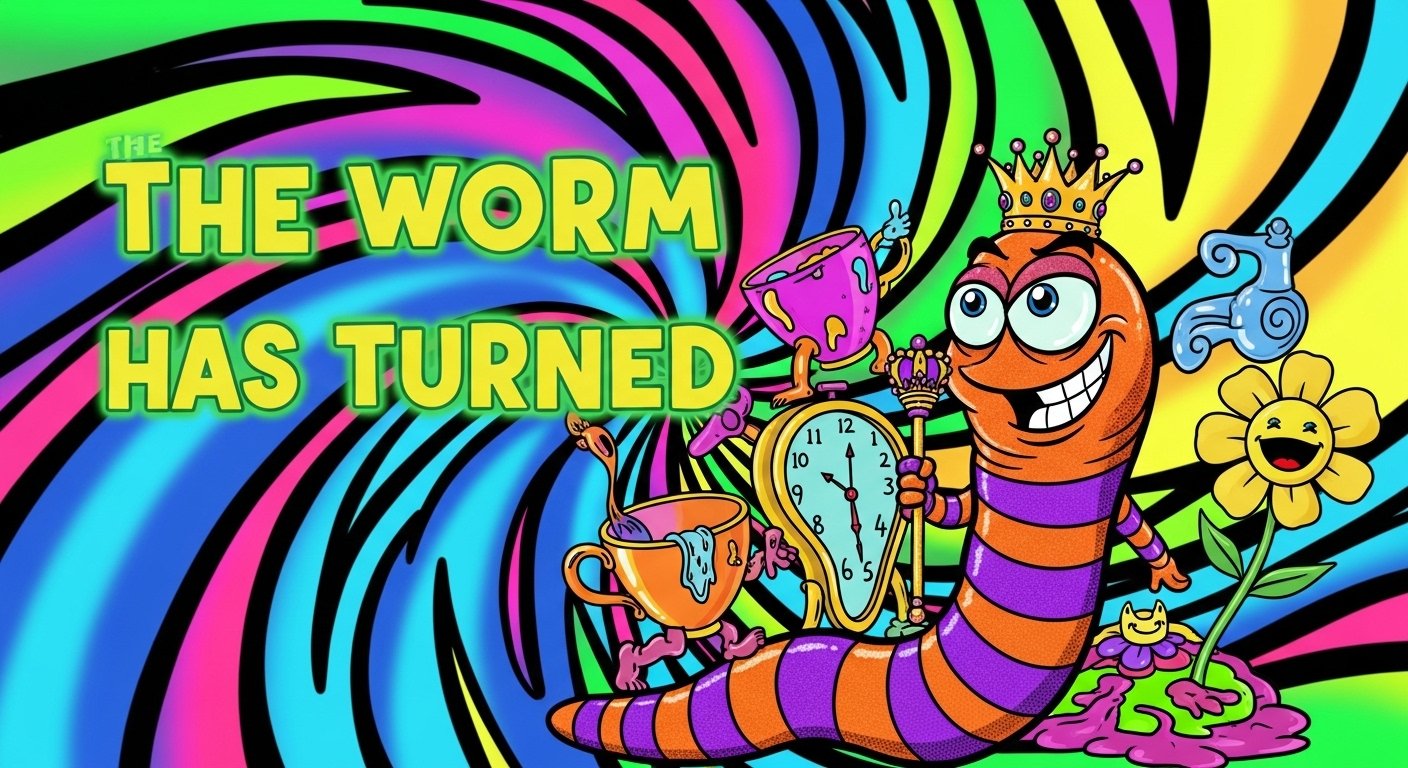
The idiom “the worm has turned” refers to a situation in which someone who was previously submissive, unlucky, or powerless has now gained the upper hand or confidence. Essentially, it signals a reversal of fortune or attitude.
The Origin of the Idiom “The Worm Has Turned”
Early References in Literature
The roots of this phrase go back to at least the 1500s. John Heywood’s 1546 collection of proverbs included: “Treade a worme on the tayle, and it must turne agayne.” This original idea conveyed that even the smallest creature will resist if provoked.
Shakespeare and Popularization
William Shakespeare further popularized the concept in Henry VI, Part 3: “The smallest worm will turn being trodden on…” Here, he illustrated that anyone pushed too far can retaliate.
Evolution into Modern Usage
By the mid-1800s, the phrase had evolved into its current form: “the worm has turned.” Today, it’s commonly used to describe someone who changes from a passive role to an assertive or victorious one.
British English vs American English Usage
While “the worm has turned” is widely understood in both British and American English, there are subtle usage differences.
British English Usage
In the UK, the phrase often emphasizes social or moral reversals, such as the underdog standing up against authority.
American English Usage
In the US, it frequently appears in business, politics, or cultural contexts, signaling a shift in influence or power.
Comparison Table
| Aspect | British English | American English |
|---|---|---|
| Emphasis | Moral/social reversal | Power/influence shift |
| Common Contexts | Literature, everyday speech | Media, business, politics |
| Frequency | Moderate | High |
When and How to Use the Phrase
In Literature and Formal Writing
Use the idiom to convey a change in power dynamics or character strength in storytelling or essays.
In News and Media
The phrase appears in journalism to describe market shifts, political outcomes, or cultural trends:
- “As the worm has turned against Big Tech, many experts call for stricter regulations.” – Bloomberg News
In Everyday Conversations
It can also be used informally to describe personal victories:
- “It seems the worm has turned in Oakland County, with local businesses thriving like never before.”
Common Misunderstandings
Mistake 1: Thinking It Refers to Literal Worms
The idiom is metaphorical; it’s about human behavior, not actual worms.
Mistake 2: Using It Only for Bad Situations
The phrase works for any reversal, positive or negative.
Mistake 3: Confusing Timing
It implies a change has already occurred, not that it might happen in the future.
Examples of “The Worm Has Turned” in Sentences
- Judging from actual uses, the worm has turned in many cultural debates. – The Chronicle of Higher Education
- Thanks to demand for artisanal spirits, mezcal is having its moment of mystique; the worm has turned. – The San Antonio Current
- As the worm has turned against Big Tech, experts suggest a rethinking of antitrust laws. – Bloomberg News
- It seems the worm has turned in Oakland County, as businesses flourish by the frozen lake. – The Detroit Metro Times
Frequently Asked Questions
Is “the worm has turned” a real idiom?
Yes, it is a long-standing English idiom with historical literary usage.
What does it literally mean?
Metaphorically, it means a previously passive or downtrodden person has gained power, confidence, or luck.
Can it be used in formal writing?
Absolutely. It’s appropriate in essays, articles, and professional analyses to describe reversals.
Are there variations of the phrase?
Yes. Older versions include “the worm will turn” or Heywood’s original phrasing.
Which audiences understand it best?
Both British and American English speakers recognize it, though the nuance may differ slightly.
Conclusion
The idiom “the worm has turned” captures the timeless idea of reversal—whether of fortune, attitude, or power. From its 16th-century origins to modern journalism and everyday speech, it remains a vivid way to describe unexpected shifts in strength or circumstance.