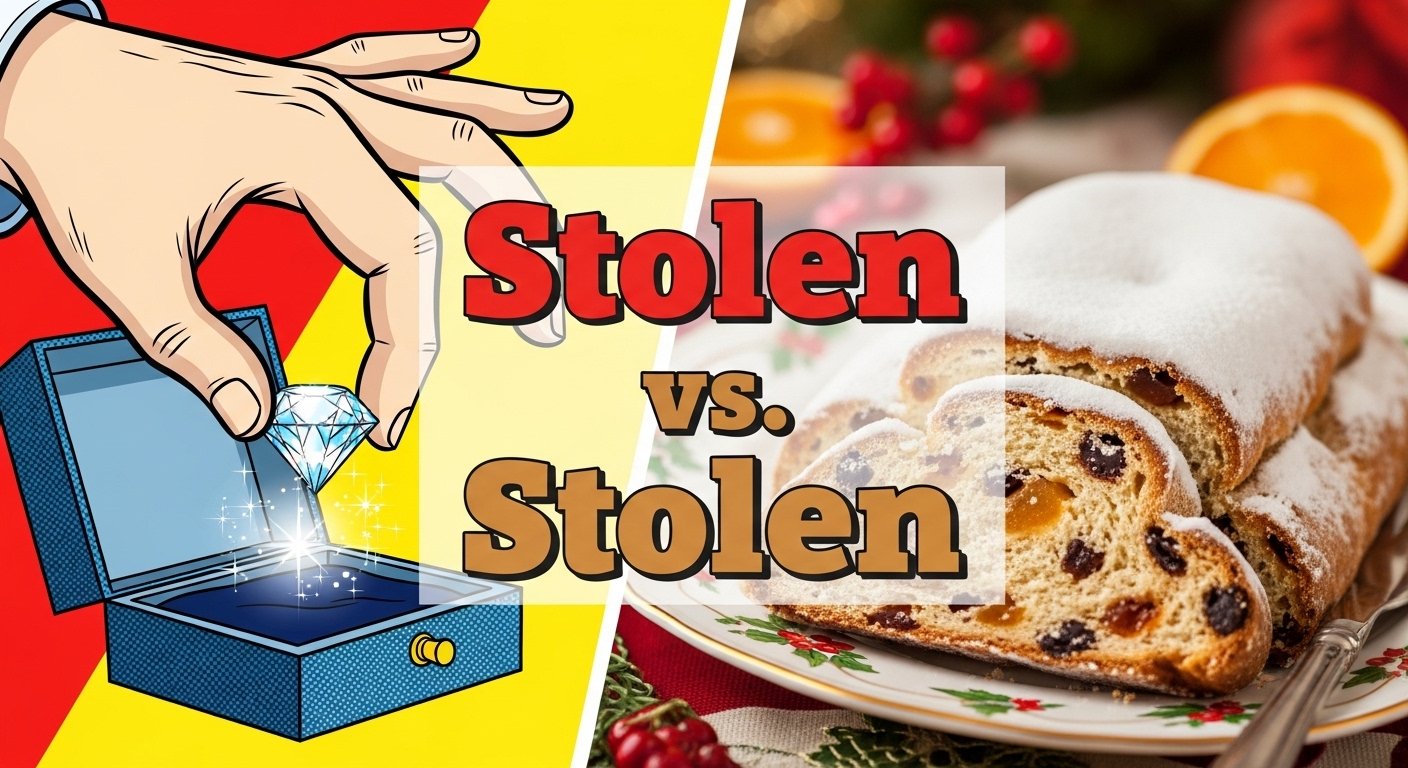
Stolen vs. Stollen: Meaning, Origins, and Usage Explained
Stolen and stollen are homophones—they sound alike but differ in spelling and meaning.
- Stolen – Past participle of steal, meaning something taken without permission.
- Stollen – A German fruit bread, often enjoyed during Christmas.
Understanding their distinctions helps avoid common mistakes in writing and conversation.
The Origin of Stolen and Stollen
Origin of the Word “Stolen”
The word stolen comes from the Old English stelan, meaning “to take something that does not belong to you.” Over centuries, it has maintained this meaning in modern English.
Origin of the Word “Stollen”
Stollen is borrowed from German. In German, the “s” is pronounced like “sh,” and the bread has been a traditional holiday treat for centuries, particularly in Dresden. The term refers to a rich yeast bread containing nuts, dried fruits, and spices.
Why These Words Are Confused
Stolen or Stollen: Which Spelling Is Correct?
Many people search for “stolen or stollen” because both words sound the same. The correct spelling depends on the meaning. Use “stolen” when talking about theft or something taken illegally. Use “stollen” when referring to the traditional German Christmas bread.
Despite their different origins and meanings, the words sound identical in English, which is why writers and speakers often mix them up.
British English vs American English Usage
While both words exist in English, stolen is commonly used globally. Stollen, being a German borrowing, is more common in culinary or festive contexts.
British English Usage
- Stolen: Standard usage in legal, news, and everyday writing.
- Stollen: Mainly referenced in recipes, holiday traditions, or cultural contexts.
American English Usage
- Stolen: Widely used in news reporting, legal writing, and casual conversation.
- Stollen: Popular during holiday cooking or bakery menus, especially around Christmas.
Comparison Table
| Word | Meaning | Context of Use |
|---|---|---|
| Stolen | Taken without permission | Legal, news, everyday |
| Stollen | German fruit bread with nuts | Culinary, festive, cultural |
Which Word Should You Use?
For General Writing
Use stolen when referring to theft. Use stollen only when talking about the bread.
For Recipes and Culinary Articles
- Stollen is appropriate for cooking blogs, bakery menus, and food guides.
For Legal and News Writing
- Stick with stolen to describe illegal or unauthorized taking of property.
For Exams and Academic Writing
- Correct usage is critical. Avoid homophone confusion by considering the meaning in context.
Common Mistakes with Stolen and Stollen
Mistake 1: Using “Stollen” Instead of “Stolen”
Example: “The car was stollen” ❌
Correct: “The car was stolen” ✅
Mistake 2: Using “Stolen” for Food
Example: “I baked a stolen” ❌
Correct: “I baked a stollen” ✅
Mistake 3: Confusing Pronunciation and Spelling
Even though they sound alike, spelling matters. Writers often rely on context to clarify.
Stolen and Stollen in Everyday Examples
In News Reports
- “Latino voters who fled dictatorships fear election was stolen from President Trump.” (USA Today)
- “A search of their vehicle revealed several items that had been reported stolen from a storage unit.” (The Napa Valley Register)
In Culinary Writing
- “The Dresden almond stollen, inspired by the German festive bread, is soaked in clarified butter and best served a week after purchase.” (The Hong Kong Tatler)
- “Centara Hotels & Resorts hosted the ceremonial ‘Christmas Stollen Mixing Ceremony’ at Zing Bakery.” (The Bangkok Post)
In Everyday Conversation
- Stolen: “My bike was stolen last night.”
- Stollen: “I bought a Christmas stollen from the bakery.”
Google Trends & Usage Data
Search Popularity
- “Stolen” appears far more frequently in searches related to crime, law, and news.
- “Stollen” spikes seasonally around Christmas.
Country-Based Usage
- US & UK: High searches for “stolen,” moderate for “stollen” during holidays.
- Germany: “Stollen” is highly searched year-round for cultural and culinary purposes.
Context-Based Usage
- Stolen dominates legal and news contexts.
- Stollen dominates baking, cooking blogs, and holiday content.
Comparison Table: Stolen vs Stollen
| Word | Meaning | Example Usage |
|---|---|---|
| Stolen | Taken without permission | “The painting was stolen from the museum.” |
| Stollen | German yeast bread with fruit | “I made a stollen for Christmas morning breakfast.” |
Checkout or Check Out: How Similar Word Pairs Cause Confusion
Since your article is about commonly confused words, this heading can internally connect another homophone-style confusion for topical authority.
Similar to “stolen vs stollen,” English contains many confusing word pairs like “checkout vs check out.” One form acts as a noun while the other works as a verb phrase. Understanding context helps avoid grammar mistakes and improves writing clarity.
Frequently Asked Questions
Is stolen a real word?
Yes, it is the past participle of steal and is widely used in legal, journalistic, and daily contexts.
Is stollen a real word?
Yes, it refers to a traditional German yeast bread containing fruit and nuts.
Do they mean different things?
Absolutely. Stolen relates to theft, while stollen refers to bread.
Which word is more common?
Globally, stolen is far more common, especially in non-culinary contexts.
Can I use both in one article?
Yes, if the context clearly distinguishes theft from bread. Ensure readers can infer the meaning.
Which word should students use?
Use stolen in essays, reports, and academic writing. Only use stollen in culinary or cultural topics.
Which word is better for content writing?
Use the word that matches the context: stolen for news and legal content, stollen for recipes, holiday guides, and cultural articles.
Conclusion
Stolen vs. Stollen is a classic example of homophones causing confusion. By understanding their origins, meanings, and contexts, writers can avoid errors. Remember:
- Use stolen for theft-related contexts.
- Use stollen for the German fruit bread, especially during holiday seasons.
Correct usage ensures clarity in writing and prevents embarrassing mistakes.