Dodged a Bullet: Meaning, Origin, Usage, and Real-Life Examples
Have you ever heard someone say, “Phew, I dodged a bullet there”? It’s a common expression in everyday English. You’ll hear it in conversations, movies, television shows, news reports, and even professional settings. But what does it really mean? Is it literal? Is it figurative? And how should you use it correctly?
In this complete guide, you’ll learn the exact meaning of “dodged a bullet,” its origin, whether it’s an idiom, alternative phrases you can use, real-life sentence examples, common mistakes, and how to apply it naturally in different contexts.
Let’s break it down clearly and practically.
Dodged a Bullet: Quick Answer
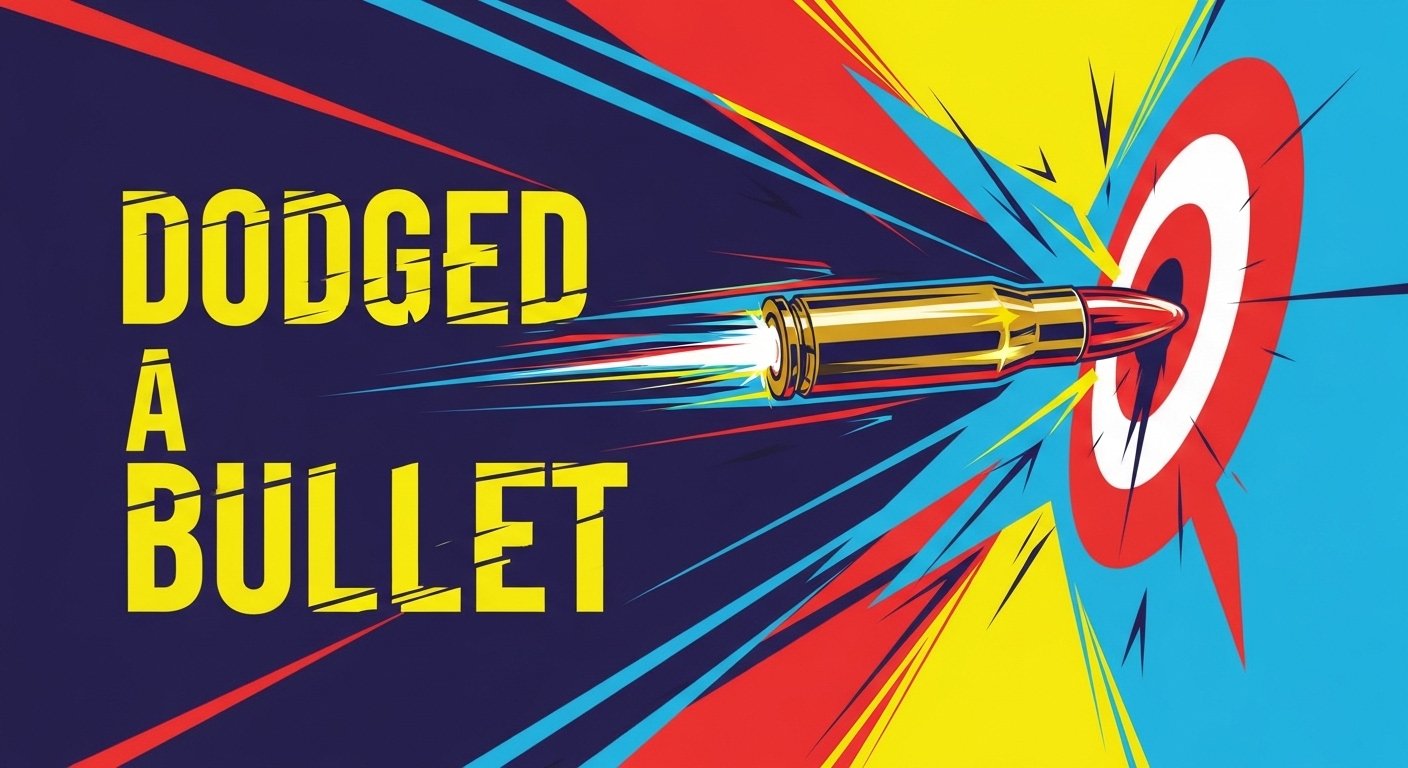
In simple terms, “dodged a bullet” means narrowly avoiding a dangerous, harmful, or very bad situation.
It describes a close call — something negative almost happened, but you escaped just in time. While the phrase comes from the literal act of avoiding a real bullet, today it is mostly used figuratively.
For example:
- “I was about to invest all my money in that company, but it went bankrupt a month later. I definitely dodged a bullet.”
- “After I found out he was dishonest, I ended the relationship. I dodged a bullet.”
In both cases, the speaker avoided serious consequences.
The Origin of Dodged a Bullet
Origin of the Word “Dodge”
The word “dodge” dates back to the 1500s. It originally meant to move quickly to avoid something. People used it when talking about physically stepping aside to escape danger or avoid being hit.
Over time, “dodge” expanded beyond physical movement. It began to include avoiding responsibilities, consequences, or problems.
Literal Battlefield Roots
The phrase “dodge a bullet” likely comes from military or combat situations. In a literal sense, dodging a bullet means physically moving out of the way of gunfire — an action that could save your life.
On a battlefield or during a gunfight, narrowly missing a bullet was the ultimate close call. The danger was immediate and deadly.
Because of this dramatic imagery, the phrase became powerful and memorable.
How the Phrase Became Figurative
As language evolved, people began using the phrase metaphorically. Instead of referring to real gunfire, it started describing any narrow escape from harm.
Now, the “bullet” represents:
- Emotional pain
- Financial loss
- Public embarrassment
- Legal trouble
- Toxic relationships
- Career disasters
The situation doesn’t have to involve real danger. It simply needs to be something serious that you managed to avoid.
Is Dodged a Bullet an Idiom?
Yes, “dodged a bullet” is an English idiom.
An idiom is a phrase whose meaning isn’t fully understood by analyzing each word separately. While “dodge” and “bullet” have literal meanings, together they usually represent something broader.
In modern usage, it rarely refers to actual gunfire. Instead, it symbolizes avoiding a bad outcome.
However, it can still be used literally in specific contexts involving real physical danger.
Common Situations Where People Say “Dodged a Bullet”
In Romantic Relationships
One of the most common uses is in dating and relationships.
For example:
- “We dated for six months, and I was thinking about marriage. Then I found out she was seeing other people. I dodged a bullet.”
Here, the “bullet” represents emotional damage and long-term regret.
People often realize they dodged a bullet only after discovering hidden flaws in a partner.
In Career and Business Decisions
This phrase is frequently used when someone avoids a bad job offer, investment, or business partnership.
Example:
- “We were going to invest our savings in that startup, but we found out they were involved in a major scandal. We dodged a bullet.”
The potential loss could have been financial or reputational.
In Academics
Students also use this phrase when they narrowly avoid failure.
- “I thought I completely failed the exam, but I passed by one point. I really dodged a bullet.”
In this context, the “bullet” represents academic consequences.
In Everyday Life
It can apply to normal daily situations:
- Taking a different road and avoiding a car accident
- Canceling plans that later turn chaotic
- Avoiding a scam
- Missing a train that later breaks down
The severity may vary, but the key idea remains the same — you avoided something negative.
What’s Another Way to Say Dodged a Bullet?
Using alternative expressions can improve your writing and make your speech more dynamic.
Here are some similar phrases:
Escaped Unscathed
Meaning: Avoided harm completely.
Example: “Despite the chaos, she escaped unscathed.”
Had a Lucky Escape
Meaning: Avoided danger due to luck.
Example: “We almost signed the contract, but something felt wrong. We had a lucky escape.”
Narrowly Missed
Meaning: Almost experienced something bad.
Example: “The car narrowly missed hitting us.”
Saved Your Bacon
Meaning: Avoided serious trouble (informal).
Example: “Backing out of that deal saved our bacon.”
Near Miss
Meaning: Almost an accident.
Example: “It was a near miss on the highway.”
Each phrase carries a slightly different tone, but they all reflect avoiding harm.
Dodged a Bullet: Examples in Sentences
Here are clear examples showing how to use the phrase properly:
- “I almost got caught in a massive car accident this morning, but I took a different route. I dodged a bullet.”
- “We were about to move into that apartment, but we discovered severe structural issues. We dodged a bullet.”
- “I thought I failed the test, but I passed by just one mark. I definitely dodged a bullet.”
- “After I found out he was dishonest, I ended things. I dodged that bullet.”
- “That company collapsed weeks after I declined their job offer. I truly dodged a bullet.”
Notice how each situation involves avoiding a negative outcome.
Literal vs Figurative Meaning
Literal Meaning
Refers to physically avoiding gunfire.
Example:
“He dodged a bullet during the shootout.”
This is rare in everyday conversation unless discussing real-life incidents.
Figurative Meaning
Refers to avoiding emotional, financial, academic, or social harm.
Example:
“I almost bought that car, but it turned out to have major engine problems. I dodged a bullet.”
This is how the phrase is most commonly used today.
Common Mistakes with “Dodged a Bullet”
Mistake 1: Thinking It Only Refers to Physical Danger
Many learners believe it can only describe life-threatening situations. In reality, it often refers to emotional or financial problems.
Mistake 2: Using It for Very Small Problems
The phrase suggests something serious. Using it for minor inconveniences can sound exaggerated.
For example, saying “I dodged a bullet” because you forgot your pen may sound dramatic.
Mistake 3: Incorrect Verb Tense
The most common form is past tense: “dodged a bullet.”
But you can also say:
- “I’m dodging a bullet.”
- “You’ll dodge a bullet if you cancel now.”
Make sure the tense fits the timeline.
Mistake 4: Overusing the Phrase
While expressive, repeating it too often in writing reduces impact. Use synonyms occasionally to maintain style variety.
Using “Dodged a Bullet” in Different Writing Styles
In Emails
“I was about to finalize the contract, but I noticed hidden clauses. We dodged a bullet.”
Professional yet conversational.
In News Writing
“Investors dodged a bullet after regulators halted the risky merger.”
Here, the tone is more formal.
On Social Media
“Just found out that company I interviewed with is laying off staff. Dodged a bullet.”
Short, relatable, and casual.
In Formal Writing
Although idioms are less common in academic writing, they can appear in opinion articles or essays.
“The organization narrowly avoided reputational damage, effectively dodging a bullet.”
In Health and Psychology Discussions
“She later realized the relationship would have caused emotional harm. In hindsight, she felt she had dodged a bullet.”
The phrase reflects emotional relief and growth.
Psychological Meaning Behind the Phrase
When someone says they “dodged a bullet,” it often reflects:
- Relief
- Gratitude
- Awareness
- Reflection
- Emotional growth
Sometimes people only recognize the “bullet” after time passes. What once seemed like a missed opportunity later feels like protection.
This phrase helps people reframe negative experiences positively.
Instead of focusing on loss, they focus on avoidance of harm.
Frequently Asked Questions
Is “dodged a bullet” a real phrase?
Yes. It is a widely recognized English idiom used in casual and semi-formal communication.
Does it always mean physical danger?
No. It is mostly used figuratively to describe avoiding emotional, financial, or social harm.
Can it be used positively?
Yes. Although it references danger, the outcome is positive because you avoided it.
Is it appropriate for formal writing?
It depends on the context. It works well in journalistic and conversational writing but may be too informal for strict academic research papers.
Can it be used literally?
Yes, but literal usage is rare in everyday speech unless discussing actual gun-related events.
Conclusion
The phrase “dodged a bullet” is a vivid and powerful English idiom that describes narrowly escaping harm, danger, or regret. Although its roots lie in literal battlefield survival, its modern usage is overwhelmingly figurative.
Whether it’s avoiding a toxic relationship, escaping a bad investment, passing an exam by one point, or sidestepping a life-altering mistake, the phrase captures a universal human experience — relief after a close call.
Now that you understand its meaning, origin, and proper usage, you can confidently use “dodged a bullet” in conversations, writing, and professional communication.
Language becomes more powerful when you understand not just the words, but the stories behind them.