Hit the Hay and Hit the Sack: Meaning, Usage, and Tips
Understanding idioms like hit the hay and hit the sack is essential for mastering conversational English. These expressions are informal ways to say you are going to bed or getting some sleep. Using them correctly can make your speech and writing sound natural and engaging.
Both idioms have interesting historical roots tied to old bedding practices, where mattresses were stuffed with hay or sacks. Over time, they evolved into figurative expressions widely used in everyday conversation. This article explores their meaning, origin, usage, and tips for using them effectively.
The Origin of Hit the Hay and Hit the Sack
Origin of the Idiom “Hit the Hay”
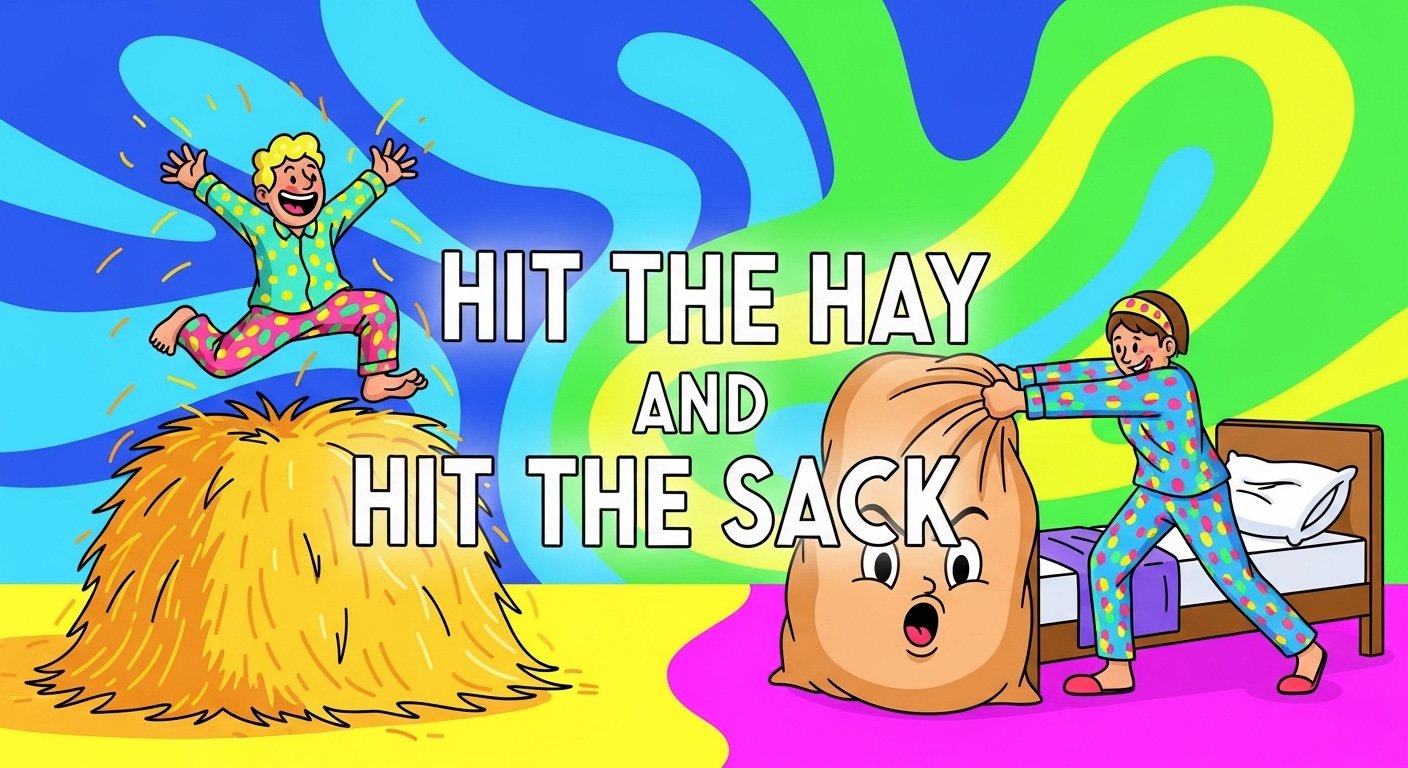
The phrase hit the hay comes from the 19th-century practice of sleeping on hay-stuffed mattresses. Before sleeping, people would “fluff” the hay by hitting it, preparing the bed for rest.
Origin of the Idiom “Hit the Sack”
Hit the sack has a similar origin. Early mattresses often were made from sacks filled with straw or hay. Hitting the sack meant adjusting the mattress before bedtime, eventually becoming a figurative expression for going to sleep.
Why These Idioms Became Popular
These idioms became common in informal speech due to their connection to everyday life. Over time, phrases like hit the hay were popularized in literature, media, and even military circles in the early 20th century.
British English vs American English Usage
British English Usage
While hit the hay is more universally understood, British English speakers sometimes favor hit the sack in informal conversation.
American English Usage
In the US, both expressions are common, but hit the sack is often slightly more prevalent in everyday speech.
Comparison Table
| Expression | Meaning | Common Use | Region |
|---|---|---|---|
| Hit the hay | Go to sleep | Informal | UK & US |
| Hit the sack | Go to bed | Casual, conversational | US & UK |
Which Expression Should You Use?
For US Audiences
Either works, but hit the sack may feel slightly more casual and widely recognized.
For UK and Commonwealth Audiences
Hit the hay is understood everywhere, though hit the sack is also acceptable.
For Global Audiences
Both idioms are informal but universally recognizable in English-speaking countries. Use them in casual content.
For Exams and Academic Writing
Avoid using these idioms in formal writing. Instead, say go to bed or sleep.
Common Mistakes with Hit the Hay and Hit the Sack

Mistake 1: Thinking One Form Is Wrong
Both idioms are correct. Avoid assuming one is a mistake.
Mistake 2: Mixing Idioms in One Sentence
Saying, “I’m going to hit the hay and hit the sack now” is redundant. Choose one expression per context.
Mistake 3: Confusing Literal vs Figurative Use
These idioms are figurative. Don’t use them literally to describe hitting hay or sacks.
Mistake 4: Overusing in Formal Writing
These idioms are informal. Using them in reports or academic papers can appear unprofessional.
Hit the Hay or Hit the Sack in Everyday Examples
In Emails
“After a long day of meetings, I’m ready to hit the hay.”
In News Writing
Casual lifestyle sections sometimes use: “The team hit the sack after celebrating their win.”
On Social Media
“I’ve been up since 5 AM—time to hit the hay!”
In Formal Writing
Avoid idioms; instead, write: “I went to bed early.”
In Health and Psychology
Idioms like hit the hay can convey sleep-related advice in an approachable, informal way.
Hit the Hay and Hit the Sack: Google Trends & Usage Data
Search Popularity
Search data shows hit the hay and hit the sack spike in evening hours, reflecting real-life usage patterns.
Country-Based Usage
- US: hit the sack more common
- UK: hit the hay slightly more frequent
Context-Based Usage
Both idioms are mostly used in informal content, social media, and conversational English.
Comparison Table: Hit the Hay vs Hit the Sack
| Feature | Hit the Hay | Hit the Sack |
|---|---|---|
| Meaning | Go to sleep | Go to bed |
| Formality | Informal | Informal |
| Region Popularity | UK & US | US & UK |
| Context | Casual conversation | Casual conversation |
| Figurative Usage | Common | Common |
Frequently Asked Questions
Is “hit the hay” a real expression?
Yes, it is an informal idiom meaning to go to bed.
Is “hit the sack” correct?
Absolutely, it conveys the same meaning as hit the hay.
Do they mean different things?
No, both idioms indicate going to sleep or resting.
Which idiom is more common?
Usage depends on region; hit the sack is more common in the US, hit the hay slightly in the UK.
Can I use both in one sentence?
It’s better to use just one to avoid redundancy.
Which idiom should students use?
For casual writing or speech, either works. In exams, use go to bed instead.
Which is better for content writing?
Both work in informal blogs, lifestyle articles, or conversational content.
Conclusion
Hit the hay and hit the sack are colorful, informal expressions for going to sleep. Rooted in historical bedding practices, these idioms add personality to everyday English. Use them wisely in conversation, casual writing, and lifestyle content, keeping context and audience in mind. Whether you say hit the hay or hit the sack, the meaning remains clear: it’s time to get some rest.