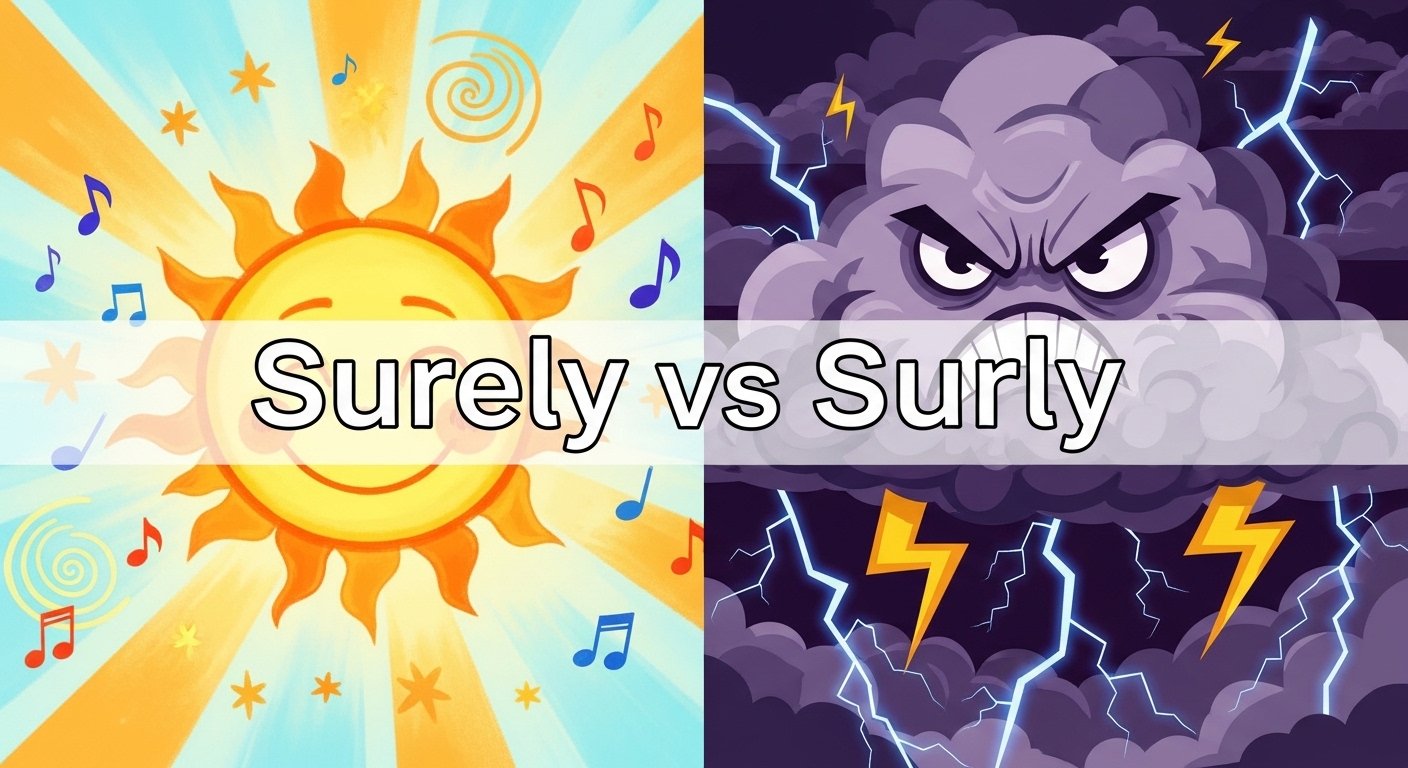
Surely vs Surly: Meaning, Grammar, and Usage Examples
Surely and surly are two English words that sound alike but have very different meanings. Many learners often confuse them, leading to awkward or incorrect sentences. Understanding their definitions and proper usage is essential for clear communication.
While surely expresses certainty or confidence, surly describes someone who is rude, hostile, or bad-tempered. Knowing the difference helps in writing accurately, whether in formal texts, casual conversations, or professional contexts. Proper usage ensures your message is understood exactly as intended.
The Origin of Surely and Surly
Origin of the Word “Surely”
The word surely comes from the Old French sur, meaning “secure” or “certain,” combined with the suffix -ly, which forms adverbs indicating manner or quality. It has been used in English since the Middle Ages to emphasize certainty or confidence.
Origin of the Word “Surly”
Surly originated from the Middle English word sirly, meaning “haughty” or “lordly.” It evolved to describe people who are rude, bad-tempered, or arrogant, first appearing in the 1300s. Related forms include surlier, surliest, and surliness.
Why Confusion Exists
The confusion arises because both words are pronounced similarly and differ only by a single letter, yet their meanings are opposite: one conveys positivity or certainty, the other negativity or hostility.
Surely vs Surly in British and American English
British English Usage
In British English, surely is widely used in formal and informal contexts to express certainty or emphasis. Surly is less frequent but commonly appears in descriptive writing about personality or behavior.
American English Usage
American English follows similar patterns: surely emphasizes confidence, while surly describes hostility or rudeness. Both are understood clearly, but context is critical to avoid misinterpretation.
Comparison Table
| Word | Part of Speech | Meaning | Origin | Example Use |
|---|---|---|---|---|
| Surely | Adverb | Certain, undoubtedly | Old French | Surely, she will arrive on time. |
| Surly | Adjective | Rude, bad-tempered, hostile | Middle English | The manager was surly with customers. |
When to Use Surely or Surly
For US Audiences
Use surely to convey confidence or certainty. Use surly to describe negative behavior or attitude.
For UK and Commonwealth Audiences
The same rules apply; however, surely may appear more in formal writing, while surly is often in narrative or journalistic contexts.
For Global English
Globally, the distinction remains the same: surely for certainty, surly for unpleasant demeanor. Misusing one for the other can confuse readers.
For Exams and Academic Writing
In academic writing, surely can emphasize logical certainty. Avoid using surly unless describing character or behavior. Precision is key in exams.
Common Mistakes with Surely and Surly
Mistake 1: Thinking One Word Is Wrong
Both words are correct; the mistake is using the wrong one in context.
Mistake 2: Mixing Words in One Text
Switching surely and surly in the same paragraph can confuse readers.
Mistake 3: Confusing Meaning
Remember: surely = certainty, surly = rudeness/hostility.
Mistake 4: Overcorrecting
Some writers avoid one word unnecessarily due to fear of misuse. Both are valid if used correctly.
Surely and Surly in Everyday Examples
In Emails
- Surely: Surely, we can finalize the project by Friday.
- Surly: The surly response from the client delayed our approval.
In News Writing
- Surely: Surely, the new policy will benefit all residents.
- Surly: The politician faced a surly crowd during the rally.
On Social Media
- Surely: Surely, this is the best travel deal of the season!
- Surly: His surly comment sparked heated debates online.
In Formal Writing
- Surely: Surely, the data confirms our hypothesis.
- Surly: The surly tone of the letter was inappropriate for business correspondence.
In Psychology and Personality Studies
- Surely: Surely, individuals with optimism tend to cope better with stress.
- Surly: Surly behavior can indicate underlying frustration or dissatisfaction.
Surely vs Surly: Google Trends & Usage Data
Search Popularity
Data shows surely is searched more frequently than surly, reflecting common usage in writing and conversation.
Country-Based Usage
Both words are understood globally, but surely dominates in educational and formal contexts, while surly appears more in narrative writing.
Context-Based Usage
Surely appears in declarative or persuasive statements; surly is used in descriptions of behavior or temperament.
Comparison Table: Surely vs Surly
| Feature | Surely | Surly |
|---|---|---|
| Part of Speech | Adverb | Adjective |
| Meaning | Certain, undoubtedly | Rude, bad-tempered, hostile |
| Common Usage | Formal writing, speech | Narratives, personality description |
| Example | Surely, she will attend. | He gave a surly reply. |
Frequently Asked Questions
Is surely a real word?
Yes, surely is a standard English adverb meaning “certainly” or “undoubtedly.”
Is surly a real word?
Yes, surly is a standard English adjective meaning “bad-tempered, rude, or hostile.”
Do they mean different things?
Absolutely. Surely conveys certainty, while surly indicates rudeness or bad temper.
Which word is more common?
Surely is more common in general writing and speech, while surly appears mostly in descriptive contexts.
Can I use both in one article?
Yes, but only if context clearly distinguishes certainty (surely) from hostility (surly).
Which word should students use?
Students should use surely for logical or confident statements and surly only to describe behavior.
Which word is better for content writing?
Use surely for persuasive or explanatory content. Use surly when depicting character or tone.
Conclusion
Surely vs surly is a common source of confusion in English. By remembering that surely expresses certainty and surly describes rudeness or hostility, you can use these words accurately in writing and speech. Context is key, and careful usage ensures clarity for all audiences.