Specter vs. Spectre: Spelling Differences, Usage, and Examples
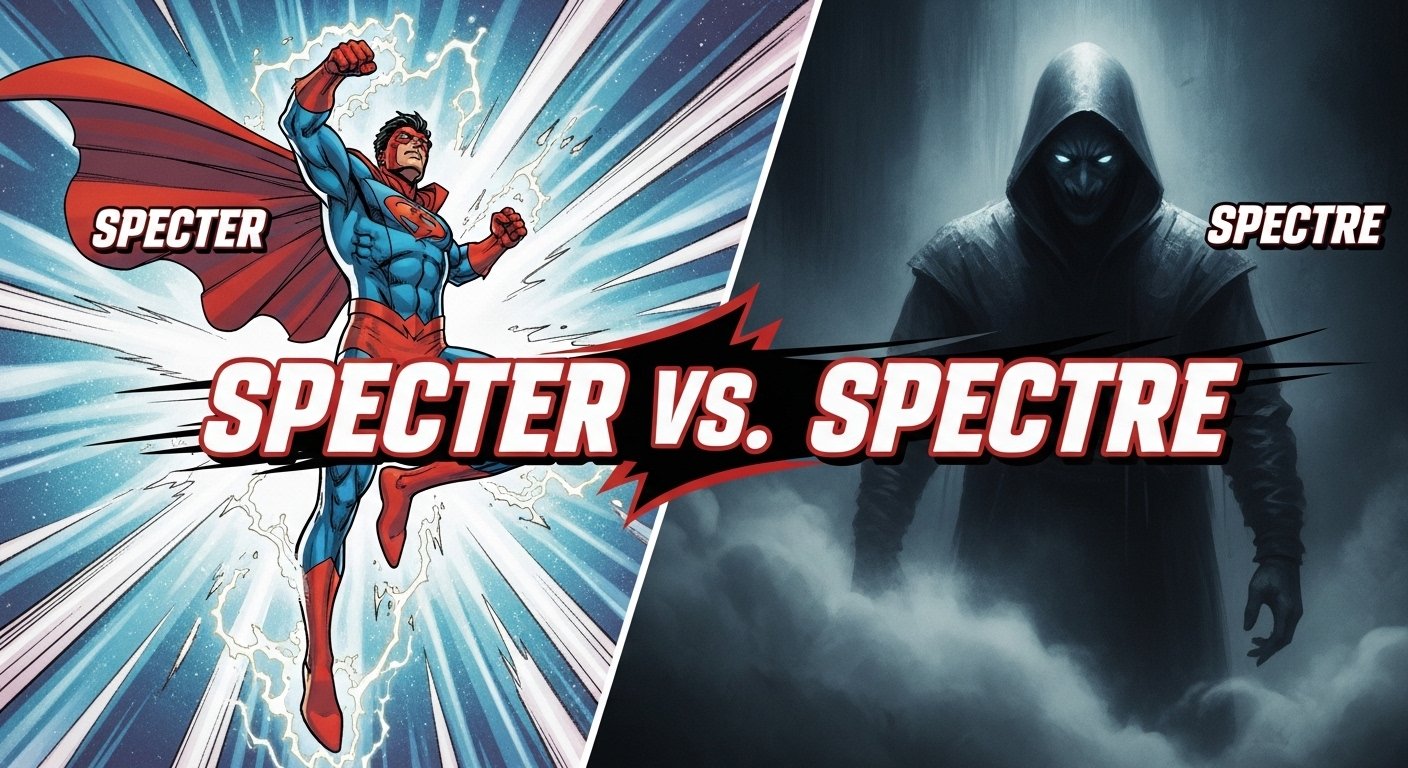
When referring to a ghostly apparition or a haunting image, American writers typically use specter, while spectre is the preferred spelling in British English and other Commonwealth countries. Both forms have a long history, but the choice largely depends on the regional style of English you follow.
The Origin of Specter or Spectre
Origin of the Word “Specter”
The word originates from the Latin spectrum, meaning “appearance” or “image.” It entered English through French in the 16th century, initially spelled spectre, and was used to describe ghostly or supernatural manifestations.
Why Two Spellings Exist
Both specter and spectre have been in use for centuries. The American variant, specter, became standard in the U.S. in the mid-20th century. Outside the U.S., spectre remains far more common, though the American-style spelling is slowly gaining recognition in British English.
British English vs. American English Spelling
British English Usage
In the UK, Canada, Australia, and other Commonwealth nations, spectre dominates. It is used in newspapers, literature, and formal writing when describing ghostly apparitions or metaphorical fears.
American English Usage
In the U.S., specter is overwhelmingly preferred, both in journalism and academic writing. It appears in political, social, and literary contexts to describe real or metaphorical haunting presences.
Comparison Table
| Feature | Spectre (UK/Commonwealth) | Specter (US) |
|---|---|---|
| Usage | Common outside the U.S. | Standard in U.S. English |
| Historical Origin | 16th century | Mid-20th century adoption in U.S. |
| Context | Ghostly or metaphorical | Ghostly or metaphorical |
| Popularity Today | Still dominant globally | Gaining recognition outside U.S. |
Which Spelling Should You Use?
For US Audiences
Use specter to align with American English conventions, especially in journalism, academic writing, or general content aimed at U.S. readers.
For UK and Commonwealth Audiences
Stick with spectre, as it is widely recognized and accepted in the UK, Australia, Canada, and other Commonwealth countries.
For Global Writing
Consider your target audience. For international publications, spectre is safer, but specter is understandable to American readers.
For Exams and Academic Writing
Follow your style guide. British exams expect spectre, while U.S. exams accept specter. Consistency is key.
Common Mistakes with Specter or Spectre
Mistake 1: Using the Wrong Regional Form
Mixing specter and spectre in the same text can confuse readers. Choose one based on your audience.
Mistake 2: Misinterpreting the Meaning
Both spellings refer to ghostly or haunting images. They are not interchangeable with “spirit” or “phantom” in every context.
Mistake 3: Ignoring Historical Usage
Older texts, especially pre-20th century, almost exclusively use spectre, even in American publications.
Mistake 4: Overcorrecting
Changing spectre to specter in UK-based writing can appear inconsistent and unnecessary.
Specter or Spectre in Everyday Examples
In U.S. Writing
- “A major drop in the city’s population since the 2000 Census had raised the specter of losing one of its six Senate seats.” – Washington Post
- “But today, a specter is haunting America: A sense that we will no longer be THE dominant world power.” – CBS News
Outside the U.S.
- “Reading were staring the spectre of relegation square in the eyes.” – Reading Post (U.K.)
- “The spectre of a two-tier or even three-tier union has long hovered over Europe.” – Globe and Mail (Canada)
In Journalism and Social Media
Both forms are used metaphorically to describe fears, risks, or looming threats. For example, “the specter of inflation” in U.S. news or “the spectre of deflation” in Commonwealth reporting.
In Literature and Formal Writing
Authors often prefer spectre for stylistic consistency, while U.S. writers may choose specter to align with American conventions.
Specter or Spectre: Google Trends & Usage Data
Search Popularity
U.S.-based search engines show specter as the dominant form, whereas searches from the UK, Canada, and Australia favor spectre.
Country-Based Usage
- U.S.: Specter > Spectre
- UK/Canada/Australia: Spectre > Specter
Context-Based Usage
In political, economic, and social contexts, the words often appear metaphorically (“specter of war,” “specter of debt”). In literary or supernatural contexts, they describe ghostly figures.
Comparison Table: Specter vs Spectre
| Feature | Specter | Spectre |
|---|---|---|
| Primary Region | United States | UK, Canada, Australia |
| Meaning | Ghostly or metaphorical | Ghostly or metaphorical |
| Historical Prevalence | Mid-20th century onward | Centuries-old dominance |
| Common Contexts | Politics, media, U.S. literature | Literature, journalism, Commonwealth media |
Frequently Asked Questions
Is specter a real word?
Yes, specter is a valid English word primarily used in American English for ghostly or metaphorical apparitions.
Is spectre a real word?
Yes, spectre is the original spelling and widely used in British and Commonwealth English.
Do they mean different things?
No, both words share the same meaning; the difference is purely regional.
Which spelling is more common?
Globally, spectre remains more common, though specter dominates in the U.S.
Can I use both in one article?
It’s best to stick to one spelling per article to maintain consistency and readability.
Which spelling should students use?
Follow the English variant required by your curriculum: spectre for UK exams, specter for U.S. exams.
Which spelling is better for content writing?
For global audiences, spectre is safer; for U.S. readers, specter aligns with local conventions.
Conclusion
Understanding the difference between specter and spectre is essential for accurate and professional writing. While the meaning remains the same, the spelling signals your regional audience. Choose wisely and remain consistent to avoid confusion, whether writing for newspapers, literature, social media, or academic purposes.